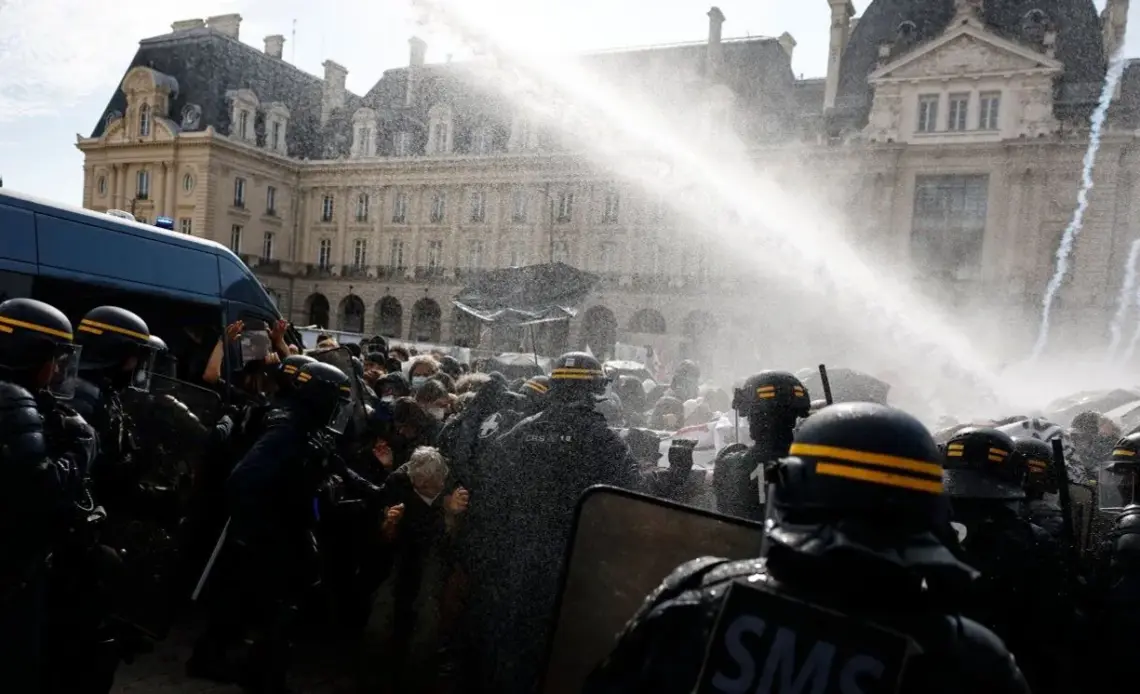
Tear gas and water cannons became the primary tools of order across France this Tuesday as more than a quarter of a million people marched to support high school students fighting for better education funding. What began as a localized protest in the Paris suburbs back in September has exploded into a nationwide movement, with massive rallies filling the streets of Marseille, Strasbourg, and Lille. From blockade-style closures at local lycées to clashes in city squares, the unrest reflects a deepening divide between the youth and the administration of outgoing President Emmanuel Macron.
The scale of the crackdown has sparked outrage among parents and educators alike. Government figures indicate that nearly 500 people were detained on Tuesday alone, contributing to a staggering total of over 6,500 arrests since the boycotts began, most of whom are minors. Reports of severe injuries, including a fifteen year old boy who reportedly lost a hand due to a police stun grenade, have intensified claims that the state’s response is disproportionate. While Interior Minister Laurent Nuñez maintained that police actions were necessary to curb rioting, critics from across the political spectrum argue that deploying rubber bullets and batons against teenagers is an unacceptable escalation.
Beyond the chaos in the streets lies a grim reality within the classrooms. Students are protesting dilapidated facilities where basic furniture like desks and chairs are missing, and some rooms are reportedly infested with rats or suffer from stifling heat during summer months. These physical failures are compounded by grueling academic schedules—some of the longest in Europe—and chronic staffing shortages. For many students in disadvantaged areas, these conditions feel like a betrayal of France’s national motto of liberty, equality, and fraternity.
As Presidential elections loom, this wave of defiance is merging with broader frustrations over rising poverty and soaring fuel costs linked to international conflict. Although the Education Ministry has attempted to soothe tensions by launching an anonymous online portal for student grievances, many demonstrators view it as too little too late. With hundreds of schools remaining partially or fully closed and calls for further protests already circulating for Thursday, the government faces an uphill battle to convince its youngest citizens that their futures are being prioritized over political stability.