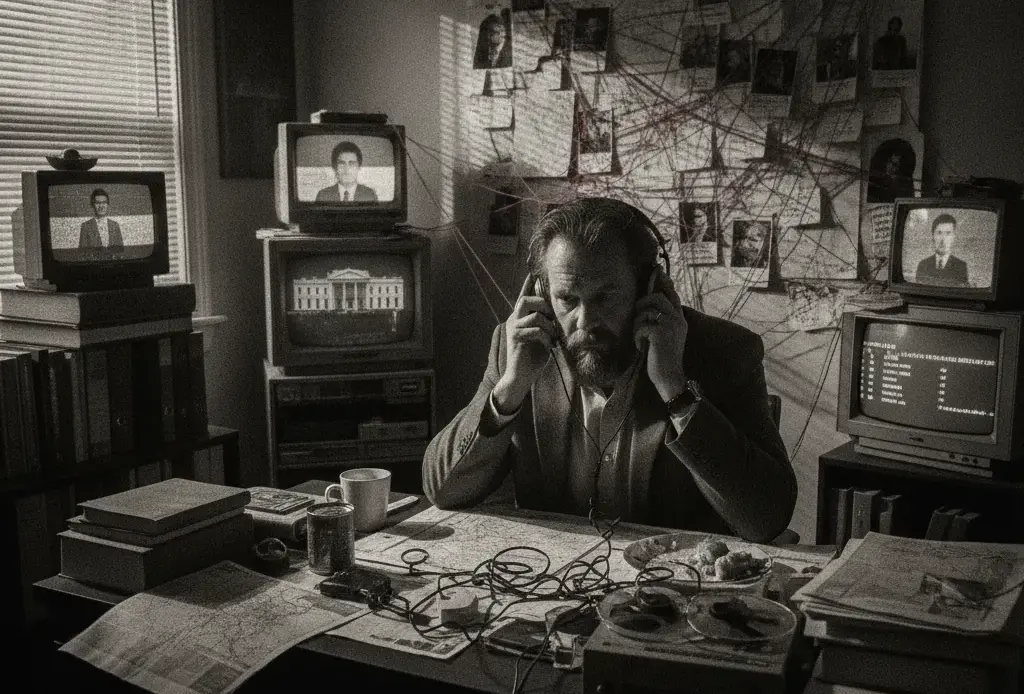
The golden age of the political conspiracy thriller arrived during the shaky foundations of the 1970s, a decade defined by Watergate and a sudden, sharp decline in public trust toward government institutions. Films from that era captured a specific kind of atmospheric dread, where an ordinary citizen would stumble upon a hidden truth only to find themselves hunted by an invisible, omnipotent power. These stories were less about the specifics of a plot and more about the crushing weight of systemic corruption and the feeling that the people in charge were operating on a different set of rules than everyone else.
Fast forward to today, and the landscape of suspicion has shifted dramatically. While seventies cinema focused on secret cabals hiding information from the masses, we now live in an era where misinformation is broadcast openly across social media feeds and echoed by high ranking officials. The mystery is no longer about uncovering a hidden document in a dark basement but rather navigating a digital wilderness where contradictory truths coexist side by side. We have moved from an age of institutional secrecy to an age of strategic noise.
Looking back at these vintage thrillers offers more than just nostalgia; it provides a mirror for our own anxieties. By analyzing how past generations processed their distrust through art, we can better understand why modern conspiracy theories gain such powerful traction. Those old movies taught us how paranoia feels when it becomes a cultural baseline, reminding us that while the medium of delivery has changed from celluloid to algorithms, the underlying fear of being manipulated remains constant.