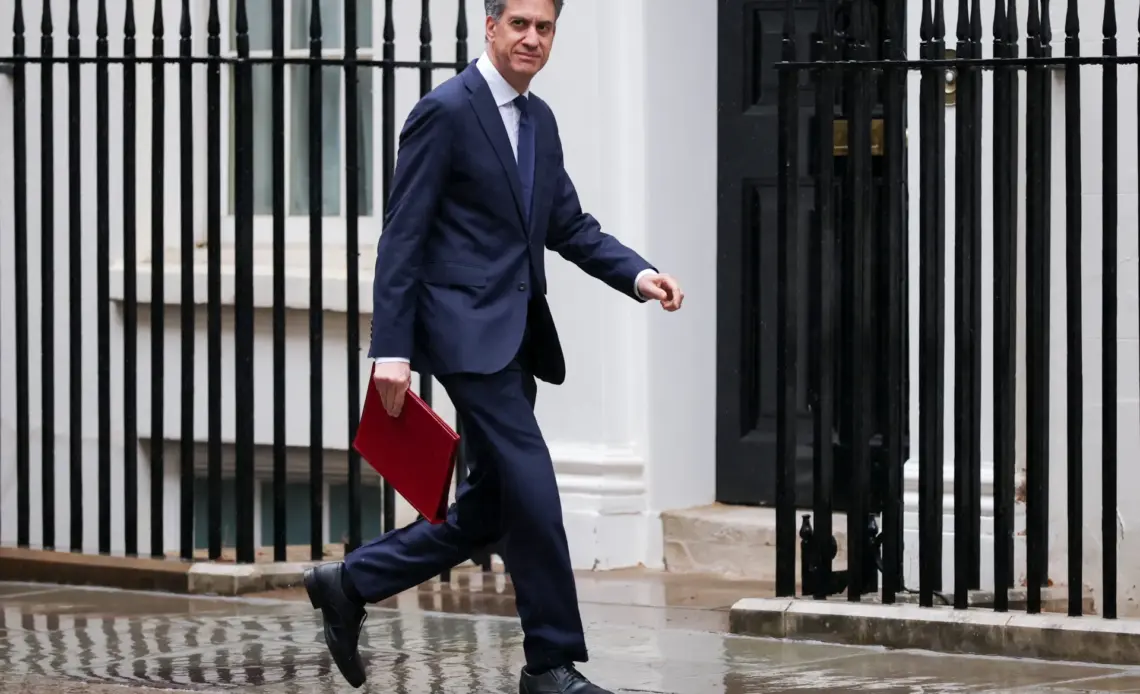
British Foreign Secretary Ed Miliband informed Parliament on Tuesday that the United Kingdom will implement targeted sanctions against illegal Israeli settlements in the occupied West Bank. The centerpiece of this new policy is a ban on imports produced within these settlements, marking a significant shift in how London handles the ongoing conflict. Addressing the House of Commons, Miliband argued that Britain can no longer rely solely on verbal condemnations of injustice and suffering, stating that it is time for the government to act decisively to halt settlement expansion.
In his address, Miliband emphasized that the UK refuses to remain a bystander while Palestinian suffering continues and the prospects for a two-state solution are eroded. He went further by characterizing the occupation of the West Bank as unlawful and suggesting that ethnic cleansing of Palestinians is taking place in certain regions. These remarks signal a hardening of Britain’s diplomatic stance under Miliband’s leadership since he took office in July.
The announcement has already sparked international friction, drawing criticism from the United States via its ambassador to Israel. Within Israel, the reaction was even more pointed, with two ministers calling for retaliatory measures against Great Britain. Despite this political tension, economists suggest that the actual financial fallout may be limited given that bilateral trade totals roughly six billion pounds annually. However, questions remain regarding how British customs officials will practically distinguish between legitimate Israeli exports and those specifically originating from forbidden West Bank settlements.